When you hear "generator," your mind probably jumps straight to power outages – those inconvenient, often stressful moments when the lights flicker and then die. While emergency backup is undoubtedly a critical role, modern Practical & Everyday Utility Generators are far more versatile. They're about empowerment, convenience, and extending your capabilities far beyond the grid, whether you’re working from a remote job site, enjoying an off-grid adventure, or simply making sure life continues smoothly, come what may.
It’s about turning the unexpected into the manageable, and opening up possibilities for comfort, productivity, and safety in countless everyday scenarios.
At a Glance: Powering Up Your Life
- More Than Emergencies: Generators offer year-round utility for comfort, safety, and convenience, not just outages.
- Essential Power: Keep food fresh, medical equipment running, and communications active.
- Work & Play: Power remote offices, outdoor projects, RV adventures, and events.
- Know Your Needs: Calculate running and starting wattage for your critical appliances.
- Types Vary Widely: From quiet, portable inverters for electronics to whole-home standby systems.
- Safety First: Always operate fuel-based generators outdoors, far from windows and doors, to prevent carbon monoxide poisoning.
- Investment in Peace of Mind: Choose the right generator for your lifestyle and enjoy reliable power.
Why Every Home (and Life) Needs a Power Plan Beyond the Grid
Think about all the things that rely on electricity in your daily life. It’s not just the big stuff. It’s the morning coffee, the evening news, the ability to charge your phone, and the confidence that your refrigerated medications are safe. Practical and everyday utility generators address these needs, transforming potential disruption into resilience.
Let's dive into the myriad ways these powerhouses serve you:
Securing the Home Front: Essentials & Safety
Power isn't just a comfort; it's often a necessity for safety and maintaining your home's integrity.
- Keeping the Lights On: Beyond simple convenience, adequate lighting prevents trips and falls, and acts as a deterrent against break-ins during widespread outages.
- Protecting Your Food Supply: Running refrigerators and freezers keeps food from spoiling, saving you hundreds of dollars and countless headaches. A microwave means hot meals even when the stove is out.
- Life-Sustaining Medical Equipment: For those relying on oxygen concentrators, CPAP machines, or refrigerated medications, a reliable power source is non-negotiable. It's truly a matter of life support.
- Maintaining Home Comfort & Structure: Keeping HVAC systems running protects your health from extreme temperatures and prevents potential home damage (like burst pipes in winter or mold growth in humid summers).
- Preventing Water Damage: Homes with basements often rely on sump pumps. During heavy rains or floods, losing power can mean extensive and costly water damage. A generator keeps that pump working.
- Staying Connected: Charging phones, laptops, and keeping Wi-Fi routers online ensures you can communicate with loved ones, access emergency services, and stay informed through critical alerts. This is also key for those who work remotely, ensuring business continuity. optimizing your remote work setup can often hinge on reliable power.
- Active Security Systems: Don't let an outage compromise your home's defenses. Generators can power security cameras, alarms, and motion lights, keeping your property secure.
Expanding Your Horizons: Work, Play & DIY
The utility of a generator isn't confined to emergencies within your four walls. It extends to how you work, how you play, and how you maintain your property.
- Remote Work Uninterrupted: If your livelihood depends on an internet connection and a powered computer, a generator ensures your home office stays functional, no matter what’s happening on the grid.
- Running Well Pumps: For homes drawing water from a private well, a generator is essential for maintaining running water for drinking, sanitation, and daily needs.
- Powering Outdoor Projects: Imagine using your power tools – saws, drills, air compressors – anywhere on your property, far from an outlet. Landscaping, construction, or impromptu repairs become feasible.
- Elevating Outdoor Events: From backyard parties to larger gatherings, generators can power lights, sound systems, catering equipment, or even bouncy castles, making any event brighter and more enjoyable.
- RV & Camping Comfort: Take the comforts of home on the road. A generator in your RV or camper means air conditioning, kitchen appliances, and device charging, making off-grid travel truly comfortable. Many people consider powering your next camping or RV adventure with a portable generator.
- Garage & Workshop Power: Tackle high-demand DIY projects like welding or using powerful air compressors without worrying about tripping breakers or insufficient power.
Decoding Your Needs: Choosing the Right Generator
Picking a generator isn't a "one size fits all" decision. It requires a bit of homework to match the right machine to your specific needs. When we talk about "home generators," we're generally referring to both large portable units (that can power several appliances or critical circuits via a transfer switch) and permanently installed standby generators (designed for automatic whole-home backup).
The Golden Rule: Calculate Your Wattage
The most crucial step is determining how much power you actually need.
- Running Wattage: This is the continuous power an appliance needs to operate steadily.
- Starting Wattage: This is the brief, higher surge of power an appliance requires to kick on (especially motors like refrigerators or AC units). Your generator needs to handle the highest starting wattage of any single appliance you plan to run.
How to Calculate: List all the appliances you want to power simultaneously. Find their running and starting wattages (often on a label or in the owner's manual). Add up the running wattages. Then, identify the single appliance with the highest starting wattage and add that to your running total. Finally, add a 20% buffer for safety and future needs.
Quick Wattage Guidelines: - 3,000-5,000 watts: Ideal for basic essentials like a refrigerator, some lights, and a few small electronics.
- 6,000-8,000 watts: Enough to run heat (furnace fan), hot water, and several essential appliances.
- 10,000+ watts: Capable of powering larger appliances such as laundry machines, dishwashers, and even some central AC units (though this often pushes into standby generator territory).
Voltage Matters: 120V vs. 240V
Most common household appliances use 120-volt power. However, larger appliances like electric dryers, well pumps, or central HVAC systems often require 240-volt power. If you need to power these, ensure your generator has at least a 30-amp/240-volt output and is connected via an appropriate transfer switch for safety and functionality.
Understanding Generator Longevity
A good generator is an investment. Consumer-grade portable generators are typically rated for 1,000 to 3,000+ hours of operation. If you run your generator for, say, 100 hours a year, that translates to a lifespan of 10 to 30 years or more with proper maintenance. Just like your car, regular oil changes and check-ups are key.
Warning Signs of Overload
Generators can be overloaded if they're trying to power too many devices or devices that exceed their capacity. Signs of an overload include:
- Dimming or flickering lights.
- Appliances turning off unexpectedly.
- The generator engine sounding louder or straining.
If you notice these signs, immediately turn off non-essential items or the generator itself to prevent overheating, damage to the unit or appliances, and even fire hazards.
How Long Can They Run?
Most portable and standby generators can run as long as they have fuel. However, manufacturers generally recommend giving the unit a rest for at least 30 minutes after every 24 hours of continuous use. This allows components to cool down and prevents excessive wear. Always turn off the generator completely before refueling. Battery-based power stations, on the other hand, can often charge while in use.
The Different Breeds of Power Producers
Not all generators are created equal. Each type has its strengths, ideal uses, and considerations.
1. Standard Fuel Generators (The Workhorses)
These are the most common and often the most budget-friendly. They run on gasoline, propane, or sometimes natural gas, with dual-fuel or tri-fuel options offering greater versatility.
- Power Output: Typically range from 1,000 to 20,000+ watts.
- Fuel Types:
- Gasoline: Widely available, but has a shorter shelf life and requires careful storage. Provides strong power output.
- Propane: Cleaner burning, longer shelf life, and can be stored in large tanks, but generally offers slightly less power than gasoline.
- Natural Gas: Requires a direct line, so it's mostly for standby units, but offers indefinite run time during outages if your gas supply isn't interrupted. Often provides the least power compared to other fuels for the same engine size.
- Portability: While called "portable," larger units can be heavy (100-200+ lbs), though most come with wheels and handles.
2. Inverter Generators (The Smart & Quiet Ones)
Inverter generators are a more advanced breed. They use a special alternator and a power inverter to convert AC power to DC and then back to "clean" AC power.
- Clean Power: This stable, consistent power output is crucial for sensitive electronics like laptops, smartphones, and flat-screen TVs, preventing potential damage.
- Quiet Operation: They're generally much quieter than conventional generators because their engine speed adjusts to the power demand, rather than running at a constant, high RPM.
- Fuel Efficiency: The variable engine speed also makes them more fuel-efficient.
- Cost: Generally more expensive than standard generators, but the benefits often outweigh the cost for specific needs.
3. Power Stations / Solar Generators (The Eco-Friendly Option)
These aren't "generators" in the traditional sense, as they don't combust fuel. Instead, they are large, advanced battery banks that store electricity.
- How they work: They are pre-charged from a standard AC outlet or, often, via solar panels. During an outage, they release this stored power.
- Indoor Use: A major advantage: no fuel, no exhaust, no engine noise means they can be safely used indoors.
- Limitations: Limited by their battery capacity. Recharging with solar panels can be slow, especially during cloudy weather or prolonged outages. Ideal for smaller loads and shorter durations.
4. Standby Generators (The Set-It-and-Forget-It Solution)
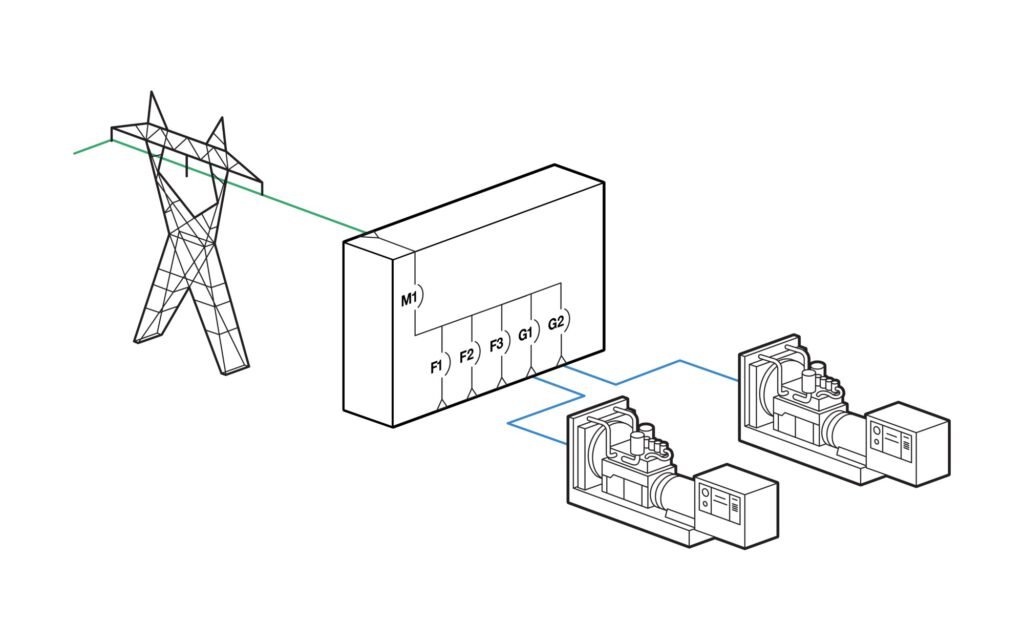
These are the ultimate in home backup power. Permanently installed outside your home, they are connected directly to your electrical system via an automatic transfer switch.
- Automatic Activation: When the utility power goes out, the transfer switch senses it and automatically starts the generator, typically within seconds. When power returns, it shuts off.
- Whole-Home or Critical Circuits: Can be sized to power your entire home or just specific, critical circuits.
- Power Output: Typically start around 10,000 watts (10 kW) and can go up to 25 kW or more for average-sized homes.
- Fuel Source: Usually run on natural gas or propane, offering longer run times than gasoline.
- Installation & Cost: Require professional installation (electrical and sometimes gas work), making them the most costly option upfront, but offering unparalleled convenience and peace of mind. For some, it's an integral part of conducting a home energy audit to plan for energy resilience.
Safety First: Non-Negotiable Rules
Operating a generator, especially a fuel-based one, comes with serious responsibilities. Carbon monoxide (CO) poisoning is deadly and silent.
- NEVER Indoors: Fuel-based generators (standard, inverter) must never be operated inside a home, garage, shed, or any enclosed or partially enclosed space.
- Maintain Distance: Position your generator at least 5-20 feet away from your home, garage, or any other buildings.
- Clear Exhaust Path: Ensure the exhaust is pointed away from doors, windows, and vents. Wind can carry CO indoors, so be mindful of its direction.
- CO Detector: Install battery-operated carbon monoxide detectors with alarms in your home, especially near sleeping areas.
- Proper Connections: If connecting a portable generator to your home’s electrical system, it MUST be done by a qualified electrician using a transfer switch. Backfeeding power into the utility grid can injure or kill utility workers. Home electrical safety tips are paramount when dealing with generators.
- Fuel Safety: Store fuel in approved containers in a well-ventilated area, away from ignition sources. Let the generator cool down before refueling.
Top Picks: Our Generator Recommendations
Based on performance, features, and value, here are some standout practical and everyday utility generators:
Best Overall & Versatile Powerhouse: DuroMax XP11000iH
This mid-size, dual-fuel (gas/propane) inverter generator hits a sweet spot for many.
- Key Features: Quiet operation at 61 dB (at 20% load), remote start, CO2 and low oil shutoff for safety, an integrated battery tender, and an onboard display for monitoring.
- Power: Strong output for its size.
- Considerations: It's heavy (200+ lbs) but has wheels and handles for maneuverability.
Best Value for Robust Portable Power: Generac GP9500E
A workhorse for those needing substantial power without breaking the bank.
- Power: 9,500W running capacity.
- Fuel: Tri-fuel option (gas, propane, natural gas) offers flexibility.
- Runtime: Features a large 7.5-gallon gas tank for extended operation.
- Budget-Friendly: Around $1100, it focuses on core functionality rather than luxury features.
- Considerations: Basic features, no digital display, remote start, or app connectivity.
Best Standby for Whole-Home Peace of Mind: Generac 22kW
The gold standard for automatic home backup.
- Capacity: Designed to power most 2,500 sq ft homes.
- Installation: Comes bundled with a 200-amp automatic transfer switch.
- Smart Features: Built-in WiFi for remote monitoring, a robust 5-year warranty, and 24/7 customer service. This is a serious step for those exploring off-grid living solutions or seeking ultimate grid independence.
Most Versatile (Portable, High-Wattage): Westinghouse WGen9500DF
This dual-fuel beast is ready for anything.
- Power: 9,500 running watts on dual-fuel (gas/propane).
- Outlets: Offers both 30- and 50-amp outputs, supporting 120V and 240V needs.
- Convenience: Push-button electric start/stop, remote start key fob, low-oil shutoff, and a clear display.
- Considerations: At 74 dB, it might be too loud for quiet camping spots or some RV parks.
Best Mid-Size for Critical Circuits or RVs: Champion 4,750-watt
A popular choice for targeted backup or medium-sized recreational needs.
- Power: 4,750 watts, dual-fuel (gas/propane).
- Use Cases: Effectively runs 3-4 critical 120V circuits or powers small to medium RVs.
- Value: Generally around $600.
- Considerations: Does not offer 240V outlets, limiting its use for larger appliances.
Best Mid-Size Inverter for Sensitive Electronics: Pulsar 7,250-Watt Dual-Fuel Inverter
Clean power and solid performance in a versatile package.
- Power: 7,250 watts, dual-fuel inverter.
- Cleanliness: Provides very clean power (THD < 3%) and stable frequency (59.97-60.09 Hz), making it safe for all your sensitive electronics.
- Ease of Use: Noted for easy assembly.
Most Portable (High-Wattage Inverter): Harbor Freight Predator 9,500
A surprisingly quiet and powerful inverter in a portable form factor.
- Type: Large inverter generator, capable of powering critical circuits in a modest home.
- Portability: Features four wheels and a fold-out handle, though its weight still makes it a two-person lift.
- Noise: Known for being very quiet for its power class.
- Connectivity: Includes various plug ends for common 120V/20A and 240V/30A twist-lock needs.
Best Standby for Smaller Homes: Generac 13kW
A smart choice for automatic backup in more compact residences.
- Capacity: 13,000 watts (11,500W on natural gas), typically enough for most of a smaller home's essentials.
- Package: Bundled with a 100-amp automatic transfer switch.
- Reliability: Switches to backup power in approximately 23 seconds, comes with a 7-year warranty, and performs automatic weekly power checks to ensure readiness.
Smart Integration: Making Your Generator Part of a Bigger Picture
Integrating a generator into your life doesn't just mean plugging things in. It means thinking about energy efficiency, smart home solutions, and preparedness in a broader sense. Consider how a generator can complement your existing setup, especially if you're keen on integrating smart home technology to manage your energy consumption more effectively.
For instance, understanding your baseline energy use can help you choose a generator more accurately and ensure you’re not overspending on wattage you don’t need. It also informs your decisions on what to prioritize during an outage.
Taking the Next Step: Powering Your Confidence
Choosing the right practical and everyday utility generator is about more than just buying a piece of equipment; it's about investing in peace of mind, resilience, and the freedom to pursue your activities without being tethered to the grid. Whether you're safeguarding your family's comfort and health during a storm, making sure that crucial deadline is met during a power flicker, or simply enjoying the amenities of home in the great outdoors, a generator empowers you.
Take the time to assess your specific needs, understand the different types, and prioritize safety above all else. With the right generator, you're not just ready for anything – you're able to live life more fully, on your own terms. And if you're ever looking for something truly unexpected to power up your day, you can always explore random stuff generators for a bit of fun. Don't forget to review safe storage practices for your generator to ensure it's ready for action when you need it most.