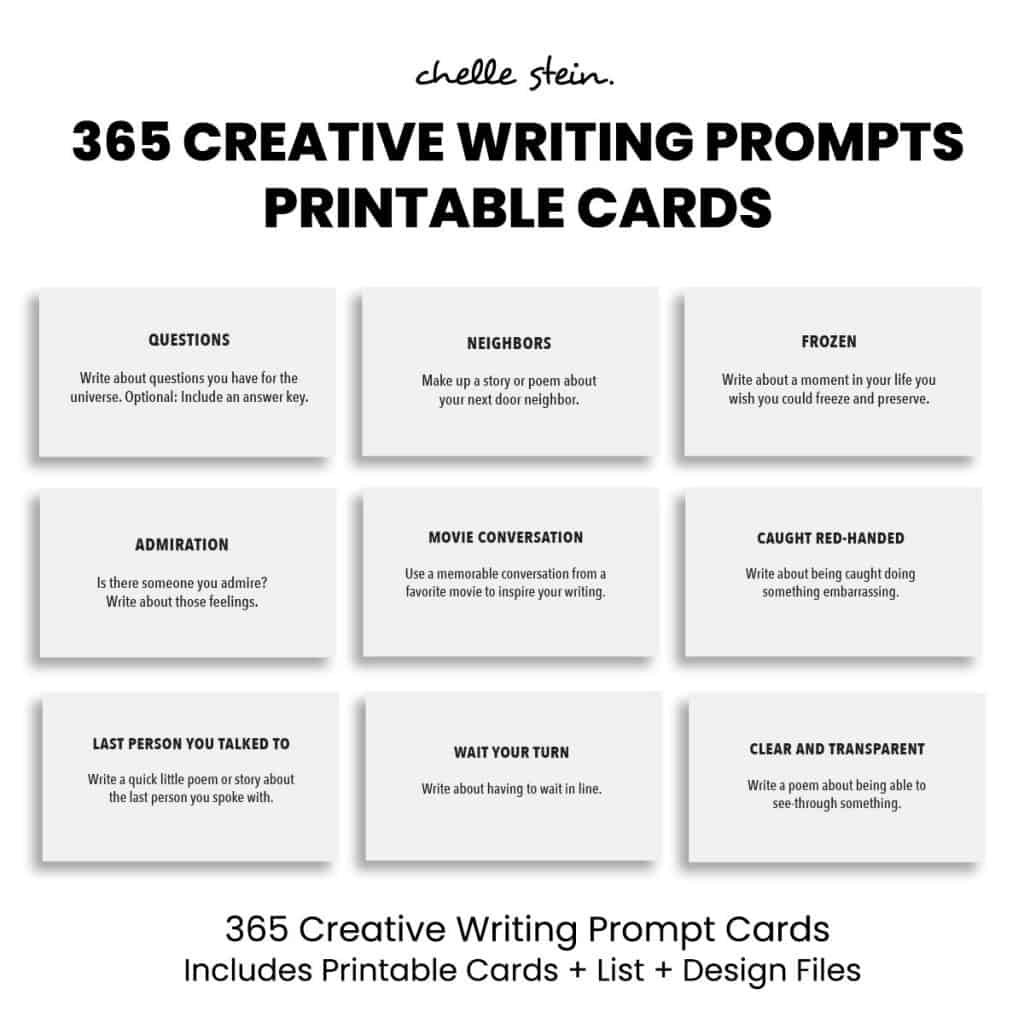
The blank page. It stares back, mocking, limitless yet terrifyingly empty. Whether you're a seasoned novelist battling writer's block, a blogger hunting for fresh angles, or a student just starting your creative journey, that initial void can feel like an insurmountable barrier. That's where Creative Writing & Content Prompts become your secret weapon – not just a trick, but a fundamental tool for unlocking imagination, building consistency, and refining your craft.
These aren't mere suggestions; they're springboards designed to ignite your creative flow, providing the spark you need to leap from inspiration to actual words on a page. Think of them as tiny, potent seeds of an idea, waiting for you to nurture them into a forest of stories or a garden of engaging content.
At a Glance: What You'll Discover
- Why prompts are essential: How they banish writer's block and spark fresh ideas.
- Expert strategies: Learn how to write consistently and read effectively, straight from the pros.
- Where to find prompts: Dive into vast directories and discover writing contests.
- Types of prompts: Explore "what if" scenarios, perspective shifts, and age-specific ideas.
- How to use prompts effectively: Turn a simple prompt into a compelling story or piece of content.
- Building a writing habit: Integrate prompts into a powerful, sustainable routine.
- Avoiding common pitfalls: Don't let prompts become another source of pressure.
- Beyond fiction: Apply prompts to blogs, social media, and business content.
Why Prompts Are Your Creative Superpower
Many writers, even those with years of experience, hit walls. The well of ideas seems dry, or the motivation to start a new project dwindles. Prompts are more than just emergency rations; they’re a vital part of a healthy creative diet, offering specific, tangible benefits that keep your writing muscles strong and agile.
Overcoming the Infamous Writer's Block
Writer's block isn't a myth; it's a real and frustrating obstacle. It often stems from an overwhelming sense of choice or fear of imperfection. Prompts cut through this by offering a clear starting point. Instead of "write anything," you get "write a story where gravity doesn't exist." This focus dramatically reduces the cognitive load, allowing your brain to immediately jump into problem-solving mode within a defined sandbox.
Sparking Imagination and Unearthing Novel Ideas
You might think your brain only has so many unique ideas, but prompts demonstrate otherwise. By presenting an unexpected scenario or a peculiar character, prompts force your mind out of its usual grooves. Imagine trying to write a story from the perspective of your shoes, as WikiHow suggests – it's an exercise in empathy and imaginative stretching that can lead to surprisingly fresh narratives and insights. This isn't just for fiction; a content creator struggling for a new blog post topic might find a prompt about "the history of a mundane object" sparking an idea for a viral explainer.
Developing Consistent Writing Habits
Consistency is the bedrock of improvement. You can't get better at writing if you're not doing it regularly. Reedsy's advice on setting realistic word count goals and establishing "Non-Negotiable Writing Time" (NNWT) pairs perfectly with prompts. If your NNWT is an hour, a prompt gives you a clear task for that hour, making it easier to sit down and just write without wasting precious time deciding what to work on. This builds momentum, turning sporadic attempts into a reliable routine.
Exploring New Genres and Styles
Are you always writing fantasy? Prompts can push you into romance or a thriller. Do you stick to first-person narratives? A prompt might challenge you to write in third-person omniscient. This deliberate exposure to different styles and genres is like cross-training for an athlete, strengthening weaker areas and making your overall writing more versatile and robust. It's a low-stakes way to experiment without committing to a full novel in an unfamiliar territory.
Mastering Your Creative Flow: Core Principles for Writers
Beyond just finding prompts, how do you cultivate the mindset and habits that make them truly effective? Expert advice points to fundamental practices that underpin all great writing. Grant Faulkner, a professional writer, offers particularly insightful guidance.
Write Constantly: The Muscle of Your Mind
You wouldn't expect to run a marathon without training your legs daily, and writing is no different. Grant Faulkner emphasizes that writing skills develop primarily through frequent practice. This means more than just working on your main project. Think about:
- Journaling: A daily practice of recording thoughts, observations, or even just what you did. It's low-pressure, helps you articulate ideas, and keeps your fingers moving.
- Freewriting: Set a timer (5-15 minutes) and write continuously about anything that comes to mind, without stopping, editing, or worrying about grammar. This bypasses your inner critic and helps you discover new connections.
- Curiosity and Critique: Be an active observer of the world around you. Ask "why?" and "what if?" Then, apply that same critical curiosity to your own writing. What works? What doesn't? How can it be better?
These practices keep your writing engine warm and ready, ensuring that when you do engage with a prompt, you're not starting from cold.
Read Extensively: The Fuel for Your Voice
"If you want to be a writer, you must do two things above all others: read a lot and write a lot," Stephen King famously declared. Grant Faulkner echoes this sentiment, stressing that extensive reading is crucial. It's not just about entertainment; it's about education.
- Appreciation for Language: Reading exposes you to the vastness and beauty of language. You begin to understand cadence, rhythm, and the subtle power of word choice.
- Discovering Your Voice: By seeing how countless other authors express themselves, you start to pinpoint what resonates with you and how your unique perspective can translate onto the page.
- Understanding Tone and Style: You learn how different writers craft distinct tones—humorous, somber, suspenseful—and how various styles evoke different feelings in the reader.
- Self-Taught Mechanics: While grammar rules are important, deep immersion in reading and writing often leads to an intuitive understanding of language mechanics. You start to feel when a sentence is awkward or grammatically incorrect, even if you can't immediately recall the rule.
Reading widely across genres, styles, and authors—both within your preferred area and outside it—will continuously fill your creative reservoir.
Building Your Routine: Practical Steps
Beyond the core principles, Reedsy offers concrete tips for structuring your writing life:
- Set Realistic Word Count Goals: Don't aim for 2,000 words a day if you're just starting. Begin with achievable weekly goals, like 500 words, and gradually increase them. Success breeds motivation.
- Stay Accountable: Share your goals and progress with trusted family, friends, or a writing group. Knowing someone will ask how it's going can be a powerful motivator to show up and do the work.
- Establish "Non-Negotiable Writing Time" (NNWT): Schedule dedicated slots in your calendar specifically for writing and treat them with the same seriousness as a doctor's appointment or a work meeting. Protect this time fiercely.
- Arm Yourself Against Writer’s Block: Don't wait for the block to hit. Have strategies ready: a list of go-to prompts, a change of scenery, a walk, or even just switching to a different writing task (editing instead of drafting).
Finding Your Perfect Prompt: Where to Look and What to Seek
The beauty of creative writing and content prompts is their sheer abundance. They exist in various forms and locations, each catering to different needs and preferences.
Online Directories and Communities
The internet is a treasure trove of prompts. Sites like Reedsy offer a vast Prompts Directory with over 2,400 story ideas, neatly categorized by genre: fantasy, romance, thriller, mystery, dystopian, dramatic, and funny. This incredible variety means you can always find something to spark your interest, no matter your mood or project. WikiHow also provides a compilation of "helpful, inspirational, cool & unique prompts" designed to get your creative gears moving.
Writing Contests: Deadlines as Motivation
For many writers, a deadline is the most potent prompt of all. Reedsy's "Reedsy Prompts Every Friday" is a fantastic example. They send five fresh creative writing prompts based on a theme directly to your inbox. You then have one week to submit a short story, with a weekly winner receiving $250 and a website highlight. This provides:
- External Motivation: The prize and recognition can be powerful incentives.
- Structure: A clear theme and deadline remove the pressure of endless choices.
- Community: Engaging with contests connects you to a broader network of writers, as Reedsy boasts a community of over 750,000 authors.
Beyond specific contests, general directories of writing contests (like Reedsy's list for fiction and non-fiction authors) can offer myriad opportunities to find prompts and practice your craft under pressure.
Age-Specific Prompts: Tailoring the Challenge
Not all prompts are created equal, nor should they be. WikiHow thoughtfully categorizes prompts for different age groups, recognizing that an elementary school student needs a different type of imaginative nudge than an adult:
- Elementary School: Simple, foundational prompts like "Write a story that starts with Once upon a time…" encourage basic narrative structure and imaginative play.
- Middle School: Prompts might introduce slightly more complex scenarios or character relationships.
- High School: These prompts can delve into more abstract themes, character psychology, or social commentary.
- Adults: Prompts for adults often explore complex emotional landscapes, philosophical dilemmas, or intricate plot mechanics. Examples like "You wake up from a coma to find 10 years have passed" or "Write a story in which gravity doesn't exist" offer rich ground for sophisticated narratives.
Self-Generated Prompts: Your Personal Wellspring
Don't underestimate your own ability to generate prompts. The world is full of inspiration if you learn to look:
- Observe Your Surroundings: A strange conversation fragment overheard on a bus, an unusual object in an antique shop, a unique architectural detail – these can all become story starters.
- The "What If" Game: Take any normal situation and inject a bizarre element. What if your pet could talk, but only in riddles? What if the traffic light always turned red when you were in a hurry?
- Dreams: Keep a dream journal. The surreal logic of dreams often contains potent narrative kernels.
- News Headlines: A real-world event, particularly one with a human interest angle, can be a great jumping-off point for exploring character, conflict, and emotion.
Categories of Prompts to Jumpstart Any Project
Prompts come in countless flavors, but understanding their common categories can help you choose the right one for your current need or even combine elements to create something entirely new.
The "What If" Prompts: Gateway to Imagination
These are the quintessential creative prompts, designed to stretch your reality and plunge you into speculative fiction. They're excellent for sci-fi, fantasy, dystopian, or even magical realism stories.
- Example: "You find a magical portal in the basement that leads to a different dimension." (WikiHow)
- Example: "Write a story in which gravity doesn't exist." (WikiHow)
- Content idea: What if your industry suddenly vanished? How would you adapt? (For a business blog)
Perspective Shift Prompts: Walking in Others' Shoes (Literally)
These prompts force you to step outside your own viewpoint, building empathy and allowing for unique narrative voices. They're fantastic for character development and exploring different worldviews.
- Example: "Write a story from the perspective of your shoes." (WikiHow)
- Example: Write a scene from the perspective of an animal observing human behavior.
- Content idea: How does your product look from a competitor's perspective? What about from a customer who hates it? (For content strategy)
Personal Reflection Prompts: Tapping into Your Inner World
These are ideal for journaling, memoir, personal essays, or even finding the emotional core for a fictional piece. They encourage self-discovery and the exploration of your own experiences and feelings.
- Example: "What can't you live without?" (WikiHow)
- Example: Write about the worst movie you've ever seen, exploring why it resonated (or infuriated) you. (WikiHow)
- Content idea: What's the biggest misconception people have about your job/industry? (For a personal brand blog)
Sensory Detail Prompts: Painting with Words
To make your writing vivid, you need to engage the reader's senses. These prompts focus specifically on evoking sights, sounds, smells, tastes, and textures.
- Example: Describe a bustling marketplace solely through sound and smell.
- Example: Write a scene where a character experiences intense hunger, focusing on the physical sensations and the way food looks and smells.
Character-Driven Prompts: Breathing Life into Personalities
Sometimes, a compelling character is all you need to start a story. These prompts focus on developing a persona.
- Example: Create a character who has a secret superpower they desperately want to keep hidden. What is it, and why the secrecy?
- Example: Write a monologue from the perspective of a villain who believes they are doing good.
Plot Twist Prompts: Injecting the Unexpected
These are excellent for pushing a story in a surprising direction or for practicing how to foreshadow and deliver a shocking reveal.
- Example: Your protagonist finally achieves their life's goal, only to discover it was all a test, and the real challenge begins now.
- Example: A minor character you introduced in chapter one suddenly becomes the most powerful figure in the story.
Genre-Specific Prompts: Targeted Inspiration
For writers who know their preferred genre, targeted prompts can be incredibly helpful. Reedsy's directory excels here, offering prompts for fantasy, romance, thriller, mystery, dystopian, dramatic, and funny stories.
- Example (Fantasy): A lone explorer discovers a forgotten city powered by the dreams of its inhabitants.
- Example (Romance): Two rivals are forced to work together on a project, slowly realizing their disdain might be something more.
- Example (Mystery): The only witness to a crime is a parrot who can only repeat phrases from bad sitcoms.
If you ever feel stuck for a specific plot element or a truly outlandish detail, remember that sometimes the most unexpected inspiration comes from simply generating random stuff generator until something clicks. This can be a surprisingly effective way to break free from predictable ideas and introduce an element of pure chance into your creative process.
How to Actually Use a Prompt Effectively
Having a prompt is one thing; using it to generate meaningful writing is another. Many beginners get bogged down in overthinking or trying to write a masterpiece from a single spark. Here’s how to approach prompts for maximum benefit.
1. Don't Overthink It: Just Start Writing
The biggest hurdle with prompts is often the analysis paralysis that can set in. Don't scrutinize the prompt for its deepest meaning or try to plan out an entire novel. The purpose of a prompt is to provide a starting point, not a full roadmap. Pick one, and simply begin. The first sentence is the hardest; once that's out, the rest often flows more easily.
2. Set a Timer and Freewrite
For most prompts, especially when you're just trying to get ideas flowing, freewriting is your best friend. Set a timer for 10, 15, or 20 minutes. During this time, write continuously without stopping, even if you write "I don't know what to write next" repeatedly.
- No Self-Editing: Do not correct grammar, spelling, or punctuation.
- No Deleting: Don't go back and erase anything.
- Follow the Thread: Let your thoughts lead you wherever they go, even if it feels tangential to the prompt. You might uncover surprising connections.
This exercise trains your brain to generate, not censor, and helps you bypass the inner critic that often stifles early ideas.
3. Let the Prompt Be a Springboard, Not a Cage
A prompt is an invitation, not a prison. While it provides a starting point, you are not bound by its exact wording or premise once your imagination takes flight. If the prompt is "a lone explorer finds a lost city," and your story veers into the explorer discovering an alien civilization in a cave, that's perfectly fine. The prompt served its purpose by getting you started; now let your creativity lead the way.
4. Combine Prompts for Unique Twists
Feeling adventurous? Take two or three seemingly unrelated prompts and see how they can intersect. For instance, combine WikiHow's "Write a story from the perspective of your shoes" with Reedsy's genre prompt for a "dystopian romance." What kind of love story unfolds from the worn perspective of two sentient shoes in a crumbling future? This mixing can lead to truly original concepts.
5. Distinguish Between Journaling and Story Writing
Be clear about your intention. Are you using the prompt for:
- Pure creative exercise/brainstorming? Then freewrite, explore, don't worry about plot or structure. This is often how new ideas for stories or content begin.
- Developing a specific skill? If you want to practice dialogue, focus on a prompt that naturally leads to conversation.
- Crafting a complete short story or content piece? Then, after the initial freewrite, you'll need to go back, outline, revise, and polish.
Knowing your goal helps you engage with the prompt more effectively.
Building a Sustainable Writing Routine with Prompts
Integrating creative writing and content prompts into your daily or weekly routine can transform your approach to writing. It's about making creation an automatic, enjoyable part of your life, rather than a dreaded chore.
The Power of NNWT with Prompts
Remember Reedsy's "Non-Negotiable Writing Time"? This is where prompts truly shine. If you've scheduled 30 minutes every morning to write, having a prompt ready eliminates the "what should I write?" dilemma. You sit down, read the prompt, and immediately get to work. This consistency builds momentum and mental discipline, making it easier to show up every day.
Weekly Contests for Consistent Practice
Participating in weekly prompt-based contests, like Reedsy's Friday prompts, offers a structured way to maintain consistency. The regular themes, deadlines, and potential for recognition provide a built-in framework that encourages continuous practice. Even if you don't win, the act of completing a story every week is invaluable for honing your skills.
Tracking Progress and Celebrating Small Wins
Keep a simple record of your writing sessions. Note the prompt you used, the date, and roughly how much you wrote. Seeing this log grow over time is a powerful motivator. Celebrate reaching your weekly word count goals, even if they're modest. Acknowledging these small victories reinforces positive writing habits.
Using Prompts to Break Monotony
If you're deep into a long-form project like a novel or a series of content pieces, it's easy to get creatively fatigued. Use a prompt to take a refreshing detour. Spend 15-30 minutes on an unrelated prompt. It's like a palate cleanser for your brain, allowing you to return to your main work with fresh eyes and renewed energy. These "breaks" can often lead to unexpected solutions for the larger project.
Common Prompt Pitfalls and How to Avoid Them
While prompts are incredibly useful, it's possible to misuse them or fall into traps that hinder rather than help your creative process. Being aware of these common pitfalls can help you navigate your writing journey more smoothly.
1. Getting Stuck Before You Start (Analysis Paralysis)
The Pitfall: Staring at a list of prompts, feeling overwhelmed by choice, or overthinking which one is "perfect." You end up spending more time choosing a prompt than writing.
How to Avoid It:
- The "First One" Rule: If you're struggling, just pick the first prompt that vaguely interests you, or even the first one you see.
- The Timer Pick: Give yourself 60 seconds to scan. If nothing jumps out, close your eyes and point. Whatever your finger lands on, that's your prompt. The goal is to start, not to find the best prompt.
2. Judging Your Work Too Soon
The Pitfall: You write a few sentences based on a prompt, immediately decide it's terrible, and delete it. This perfectionism stifles experimentation and prevents ideas from developing.
How to Avoid It:
- Embrace the "Messy First Draft": Understand that prompt-based writing is often about generating raw material. It's not meant to be polished prose.
- Freewrite and Forget: Follow the freewriting rule: no editing, no deleting. You can always come back to it later (or never). The act of creation is the reward.
3. Trying to Write a Masterpiece from a Prompt
The Pitfall: Approaching a simple prompt with the expectation of producing a publishable short story or a viral blog post in one sitting. This unrealistic pressure often leads to frustration and giving up.
How to Avoid It:
- Adjust Your Expectations: Remember that prompts are for practice, exploration, and idea generation. Some might lead to brilliant pieces; most will simply be exercises. That's okay.
- Focus on the Process: Enjoy the act of writing itself, the exploration of ideas, and the freedom to experiment without the burden of outcome.
4. Ignoring Prompts That Don't Immediately "Click"
The Pitfall: You only pick prompts that instantly excite you, missing out on opportunities to stretch your imagination and write about unfamiliar topics or perspectives.
How to Avoid It:
- Embrace the Challenge: Sometimes the prompts that initially seem least appealing are the ones that push you the most and lead to the most surprising discoveries.
- "Force" It for 10 Minutes: Commit to writing for just 10 minutes on a challenging prompt. You might find a hidden angle or a spark of interest once you start engaging with it.
5. Using Prompts as an Excuse for Not Working on Your Main Project
The Pitfall: Constantly doing prompt-based freewriting instead of making progress on your novel, article, or other significant work. Prompts become a form of productive procrastination.
How to Avoid It:
- Strategic Integration: Use prompts strategically as warm-ups, brain breaks, or dedicated exercises for specific skills.
- Schedule Prompt Time: If you have a larger project, dedicate separate, specific time slots for prompt-based writing, ensuring it doesn't encroach on your main work time. For example, "First 15 minutes of writing time is always a prompt."
Beyond the Page: Prompts for Content Creation
Creative writing prompts aren't just for fiction writers. They are invaluable tools for content creators, marketers, entrepreneurs, and anyone who needs to generate engaging ideas regularly. The principles of sparking imagination and overcoming block apply directly to blogs, social media, email newsletters, and even video scripts.
Generating Blog Post Ideas
Staring at your content calendar with a blank mind? Prompts can kickstart your thinking:
- "What If" for Industry: What if a major trend in your industry suddenly reversed? What would be the implications? (E.g., for a tech blog: What if the internet disappeared for a day?)
- Perspective Shift: Write a post from the perspective of your customer's biggest pain point. How would it describe its own existence?
- Personal Reflection: Share a personal anecdote related to your industry or expertise, using a prompt like "What was the biggest lesson you learned from a professional failure?"
Fueling Social Media Engagement
Short, punchy prompts are perfect for social media captions, questions, and quick posts:
- Fill in the Blank: "If I could _______, I would achieve _______." (Encourages audience participation)
- "A Day In The Life" Twist: "Describe your typical workday if one key tool/service didn't exist."
- Mini-Story Prompts: "Tell us a tiny story about the last time you were truly inspired."
Overcoming Content Block
Just like writer's block, content block can be paralyzing. Keep a list of go-to content prompts:
- Problem/Solution Focus: "Identify a common, unspoken problem your audience faces, and offer an unexpected solution."
- Myth Busting: "What's a widely held belief in your niche that you know to be false? Debunk it."
- Analogy Prompt: "Explain a complex concept in your field using a simple, everyday analogy (e.g., 'Your marketing strategy is like a recipe...')."
By applying the same flexibility and low-pressure approach, content creators can harness prompts to maintain a consistent flow of fresh, relevant, and engaging material.
Your Next Steps: Turning Prompts into Published Work
You've used prompts to spark ideas, develop habits, and generate new content. Now, what's next? For many, the goal is to take those raw materials and refine them into something shareable, publishable, or truly impactful.
Polishing Prompt-Generated Pieces
Not every prompt leads to a masterpiece, but some will yield surprising gems. If you've written something compelling from a prompt, don't let it sit in a dusty folder. Treat it as a first draft:
- Re-read with Fresh Eyes: Take a break, then come back to it. What stands out? What needs clarification?
- Refine and Develop: Expand on interesting characters or plot points. Tighten language, improve dialogue, and ensure a clear narrative arc for short stories. For content, strengthen your arguments and calls to action.
- Seek Feedback: Share your polished piece with a trusted writing partner, a critique group, or even a beta reader. Fresh perspectives can highlight areas for improvement.
Submitting to Contests and Literary Magazines
If your prompt-inspired work develops into a strong short story, consider submitting it. Reedsy provides excellent resources for this:
- Writing Contests: Keep an eye on contests like "Reedsy Prompts Every Friday" and their broader directory of writing contests. These offer deadlines and potential recognition.
- Literary Magazines: Reedsy also offers a directory of 100+ reputable literary magazines. Research these carefully to find ones that match your story's genre and style. Pay attention to submission guidelines!
Continuous Learning and Community Engagement
Your journey as a writer or content creator is ongoing. Prompts are just one tool in a larger toolkit:
- Courses and Workshops: Consider Reedsy's free 10-day course "How to Write a Short Story That Gets Published" or other reputable writing workshops.
- Connect with Authors: Engage with the vast community of authors on platforms like Reedsy. Share your work, offer feedback, and learn from others' experiences.
Ultimately, creative writing and content prompts are more than just solutions to writer's block; they are pathways to greater creativity, consistency, and confidence. Embrace them, experiment with them, and watch as they transform your approach to the written word. The blank page no longer needs to be a source of dread, but an open invitation to explore infinite possibilities.